He Heard Good Things
It was too late for him to find another place to live since he had already sold his home. It sounded like a nurturing, fun nursing home he'd heard good things about.


Having spent a week at the home, he was enjoying every minute. However, everything changed once he read the monthly fee. What were they thinking?
The Paper
He still held the warm paper in his hands as if it had just been pulled from the printer moments ago. It was left by the old man's bedside table by the nurse, who immediately left.


As she yelled, "This month's fee," she sounded as if she was in a hurry to leave the room. He picked up the paper and reached for his reading glasses. There was no way he knew what lay beneath that white sheet.
A Peaceful Life
Nevertheless, Edward Jenkins had every intention of spending the last years of his life in this home. Jenkins spent most of his retirement years living in a cozy, two-bedroom house on the edge of a bustling Montana town.


Photographs were displayed throughout his home, portraying a life well lived, a world lived to the fullest, and memories that spanned generations.
Keeping To Himself
As the oak tree that stood guard in Jenkins' front yard stood guard over the changing landscapes of his life, Jenkins, today 83, had resisted the changes with quiet resilience.


With his only son living upstate, the maintenance of the house and the solitude of his independence began to weigh heavily on him as time went on.
A Difficult Decision
His decision to sell his home was made with a heavy heart after much contemplation. A comfortable spot at Oakwood Manor, the best nursing home in town, would be secured with the proceeds.
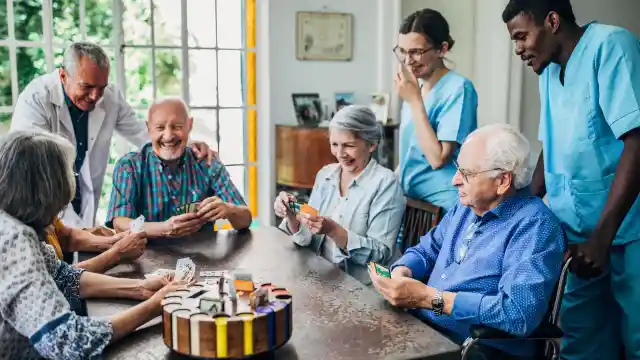
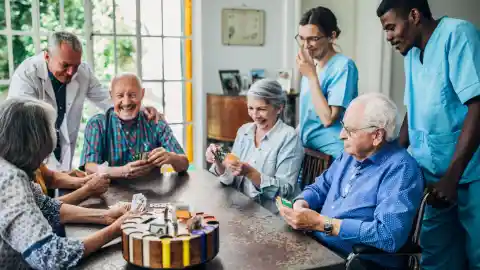
Oakwood was the perfect place for him to spend his golden years due to its excellent care and vibrant community. As Jenkins would learn, this decision would lead to a series of unexpected confrontations and, ultimately, to a struggle for respect and dignity.
He Loved It There
Oakwood Manor was a delight from the beginning. Jenkins could not be happier that the reviews were true.
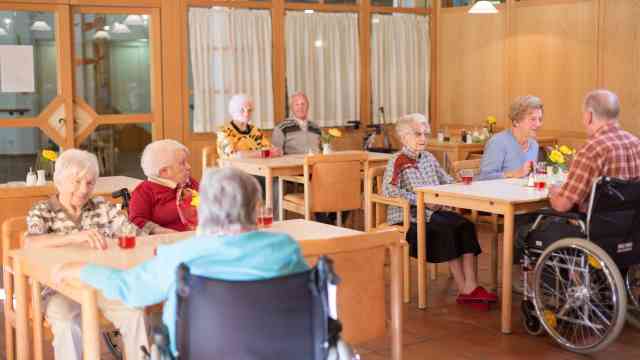

There was excellent food, the staff welcomed him with a smile, and there were activities that kept him engaged as he wished. As he browsed through books from different genres and eras, he found solace in the little library. Yet dark clouds loomed above him.
It Was Perfect
Each resident had stories that could fill books, too, as they enjoyed each other's company. Having seen everything the world had to offer, Jenkins and his friends were glad to be around like-minded people.

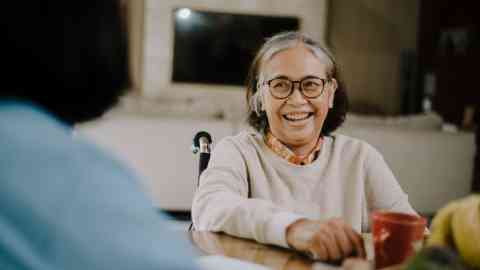
In his new home, he realized that he belonged, something that had eluded him in his cottage since he lived alone. As each day passed, moving here seemed more and more like the right decision.
Sentimental Value
A hat Jenkins brought with him to Oakwood was one of the few possessions he brought with him. It was an apparently ordinary piece of clothing that somehow held a special place in Jenkins' heart.


The hat was a military hat, an old but beautiful green beret that, like the many people who lived in the manor, had seen much of the world. He had inherited it after the death of one of his childhood best friends. His troubles with Oakwood would revolve around it.
A Tribute To His Friend
As a symbol of a promise made long ago, Jenkins wore it every day as a tribute to his fallen friend, a promise of living a life of purpose, of remembering, and of never forgetting.


As much as the hat was made of fabric and thread, it held secrets, was a constant reminder of death, and was part of the history of the family.
Out Of Nowhere
A manager of Oakwood Manor approached Jenkins as he read one morning in the common area. She had long been overbearing to Jenkins, although he didn't mind it much.


In an uncomfortably stern tone, she informed Jenkins that his hat would no longer be allowed in the nursing home's communal areas.
Decorum
"It's about maintaining a certain decorum," she explained, though her words felt hollow to Jenkins. He could sense an underlying discomfort in her words.


Perhaps it was a misguided attempt to keep the environment neutral, free from anything that might remind its inhabitants of the conflicts and divisions of the past. Jenkins tried to reason, to explain the significance of the hat, but his words fell on deaf ears.
A Price To Pay
The situation escalated when, at the end of that week, the nurse came into Jenkins’ room with the note fresh out of the printer.


Jenkins took it and quickly read, noticing that it was the monthly fee for staying at the nursing home. The nursing home had decided to impose an additional fee of $300 on his monthly bill, a penalty for his insistence on wearing the hat within the premises.
An Unwelcome Personal Furnishing
The justification cited was as perplexing as it was infuriating – the hat was considered a "personal furnishing" that went against the community's guidelines.


Jenkins was beyond aghast. Never in his life had he felt so misunderstood, so trivialized. The hat, and everything it represented, was being reduced to a mere nuisance, a violation of policy.
The Veteran's Resolve
But those who knew Jenkins knew him as a man of quiet strength and unwavering principles. He had faced adversity before, had stood in the trenches with his brothers in arms, fighting for the values he held dear.
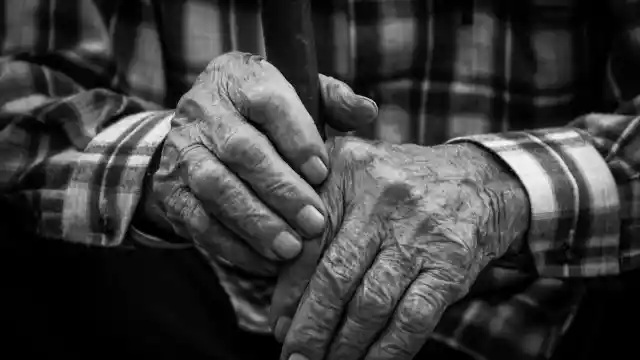
This battle, albeit of a different kind, was one he was prepared to fight. He reached out to fellow veterans within the manor, sharing his story, seeking their counsel and support. He should have known that that wouldn’t be enough.
Strategizing
What Jenkins found was a brotherhood, undiminished by age or circumstance, ready to stand with him. Even residents who weren’t veterans rallied behind him, understanding his plight and declaring that the manager was being unfair.
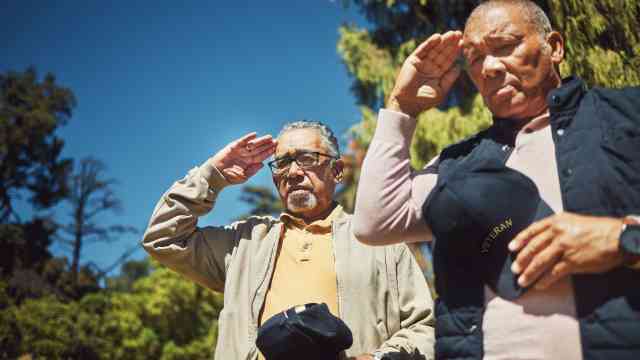
Together, they began to strategize, to plan their course of action. They understood the power of unity, of a shared voice against injustice. But the manager was also strategizing.
The Gathering Storm
Word of Jenkins's plight spread through Oakwood Manor like wildfire. More residents, once indifferent, began to take notice, to question the policies that sought to strip away the very identities of those it claimed to serve.


Jenkins was quickly becoming a symbol of resistance, a beacon for those who had silently endured grievances of their own. The manager knew she needed to shut it all down before it was too late.
At A Crossroads
The atmosphere within the nursing home began to change, conversations sparked in dining halls and lounges, all centered around the question of individual rights and the true meaning of community.


The staff, too, found themselves at a crossroads, caught between the directives of management and the growing discontent among the residents.
An Unlikely Alliance
As the tension within Oakwood Manor reached its peak, an unlikely ally emerged. Sarah, a nurse who had worked at the nursing home for several years, became a vocal supporter of Jenkins's cause.
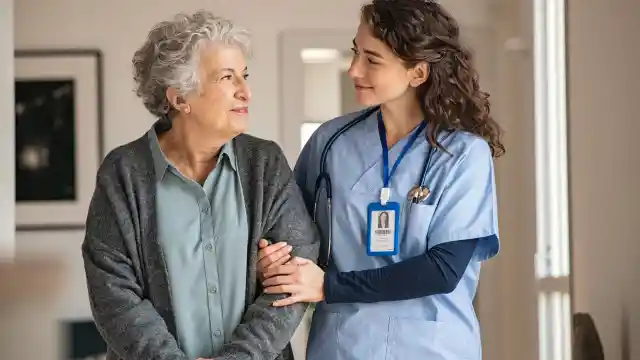

She had witnessed the transformative power of personal items and memories in the lives of the residents, how a simple photograph or piece of clothing could bring joy, comfort, and a sense of identity. She had no clue that her days as a worker at Oakwood were already numbered.
A Letter Comes In
Sarah's advocacy brought a new dimension to the struggle, highlighting the importance of empathy and understanding in caregiving.


Her courage to speak out, to challenge the status quo, inspired others within the staff to reconsider their stance. But that was until she got a letter relieving her of her duties. Cited as a reason for her termination of service was that she was riling up the residence and promoting bigotry.
Ruining Lives
The termination of Sarah’s service was enough to quiet the whole of Oakwood Manor. Jenkins felt the sting of seeing one of his best supporters suffer because of him.


From what little he learned about Sarah, he knew she had two kids. He wondered how she’d support them without a job. Wouldn’t it be better if he just paid the $300 and took off his hat instead of ruining more lives?
The Meeting
A meeting was called, a gathering of residents, staff, and management, to address the growing unrest. Jenkins, accompanied by his fellow veterans and supporters, presented his case with dignity and conviction.


But even then, a tinge of fear underlined his tone. He’d not meant to hurt anyone. But now, one of the staff was jobless because of him. He needed to fix it.
Sarah’s Voice
With quiet resolve, Jenkins spoke of his friend, of the war, of the promise he had made. He spoke of the significance of the hat, not as a piece of attire, but as a testament to the sacrifices made for the freedoms enjoyed today.


The room was silent, the weight of his words hanging heavy in the air. But out of nowhere, Sarah’s voice came. Everyone turned around, surprised to see her again.
The Green Light
With a sad smile, she spoke about the therapeutic value of personal belongings and the need for a more compassionate approach to care.


Her eyes were narrowed, her gaze trained at the manager. She turned to Jenkins and nodded before walking out. As a man of war, Jenkins knew what this meant. Sarah was giving him the green light to bring out the big guns. But Jenkins knew there was nothing else he could do.
The Reveal
Little did the management and people in the meeting know Jenkins's son, a powerful and influential business figure, had been secretly monitoring his father's care.


When he learned of the unjust treatment and Sarah’s firing, he was furious. With his vast resources, he orchestrated a series of events that would expose the nursing home's negligence and hold them accountable.
The Investigation
It started with an anonymous tip to a local news agency, leading to a full-blown investigation into Oakwood Manor’s practices.


Journalists dug deep, uncovering stories of neglect and mismanagement that went far beyond Jenkins’s situation. The public outcry was immediate and intense, putting the nursing home under a searing spotlight they could not escape from.
The Fallout
The exposure led to regulatory scrutiny, with inspectors descending on Oakwood Manor. They left no stone unturned as they dug, finding issues in almost every corner of the home’s management.


Violations were found, fines were levied, and the manager found herself at the center of a legal storm. The nursing home’s reputation was in tatters, with families pulling their loved ones out and seeking better care elsewhere.
A Court Hearing
The investigators took the floor at a court hearing a few weeks later. With irrefutable evidence, they laid bare the mistreatment and systemic failures within Oakwood Manor.
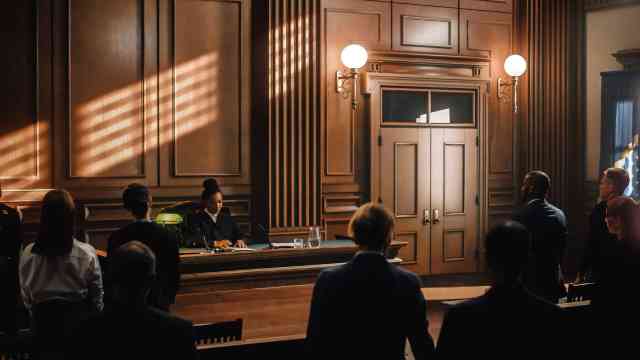

They spoke of secret recordings, of testimonies from staff and residents, of documents that painted a damning picture of negligence and a lack of empathy towards the very people they were supposed to protect and care for.
The Apology
In a desperate attempt to salvage what was left, the nursing home's management laid off the manager and issued a public apology to Jenkins and Sarah, reinstating Sarah with back pay and promising reforms in their policies.


Jenkins’s hat was no longer an issue; it was seen as a symbol of the veteran's resilience and the collective strength of the residents.
A New Beginning
The events led to a shift in culture within Oakwood Manor and across the industry, with a renewed focus on the dignity and rights of the elderly.


Jenkins, with his hat proudly on display, became an unlikely hero, a beacon of change in the twilight of his life. Although he wasn’t sure who’d sent the reporters, he had an inkling who it was, and called to say thank you.
The Legacy
Jenkins’s son watched from the shadows, satisfied with the outcome. He had not only protected his father but had also sparked a movement that would ensure better care for all seniors.


Oakwood Manor, once a place of neglect, was now leading the way in compassionate elder care, all because they underestimated the resolve of one old veteran and his powerful ally.